ViCafé
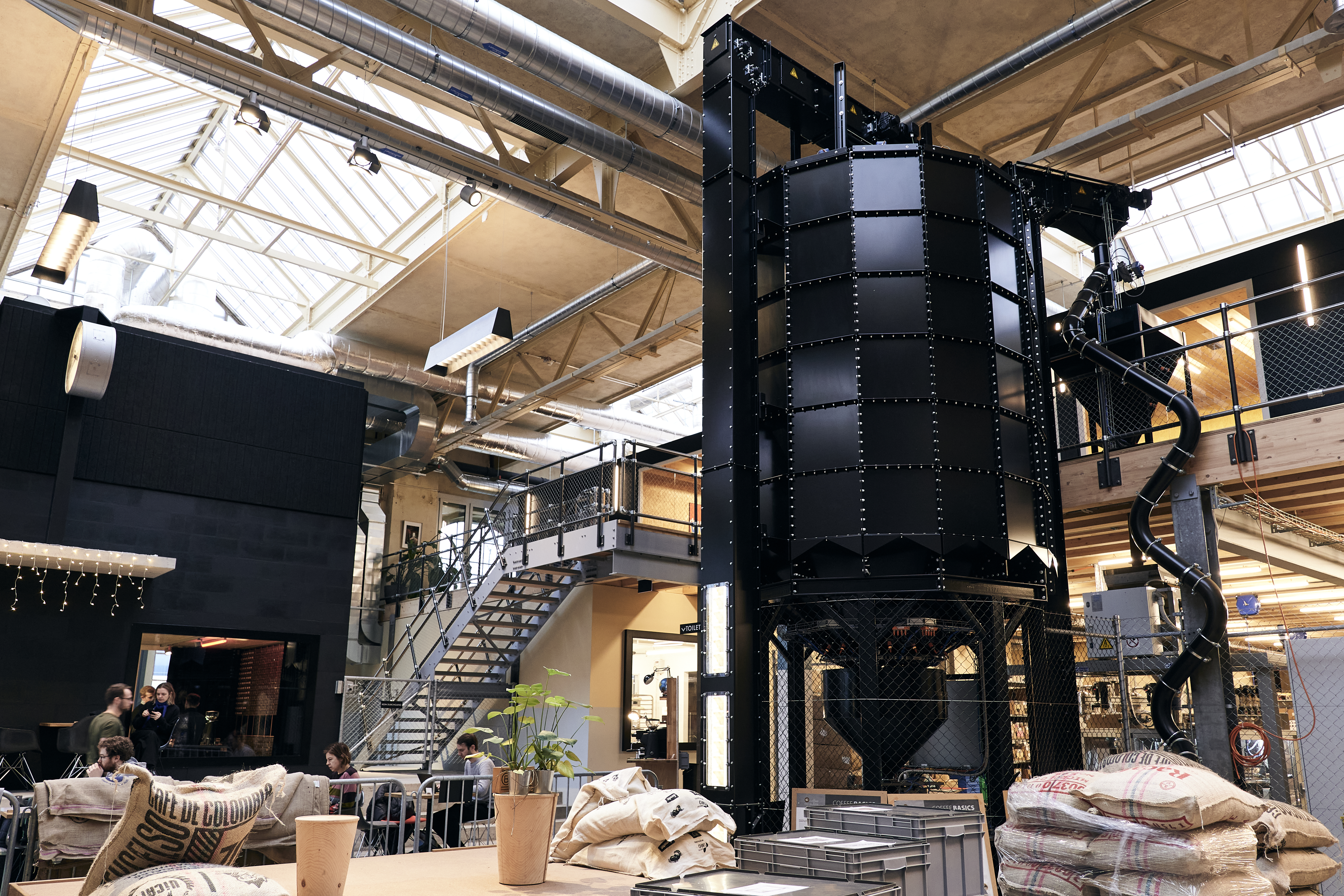
ViCAFE is a Swiss specialty coffee company with 17 retail locations across Switzerland. What started as a small café has grown into a fast-moving multi-site brand, roasting coffee for cafés, online customers and wholesale partners. In 2023, ViCAFE brought all of its operations together into a new 1,500 m² headquarters in Zurich, combining roasting, logistics, offices and a café under one roof.
With 180 tons roasted in 2024 and 210 tons projected for 2025, the company is growing at roughly 20% per year. But in Switzerland, growth comes with a challenge: labour is expensive, teams are lean, and inefficiencies show up fast.
The goal for the new roastery was not just more capacity. It was to build a system that could scale without becoming complicated to run.
The challenge: knowing where to start
Like many specialty roasters at this stage, ViCAFE did not have a large internal engineering team. They also did not want to hire an external consulting firm to design the factory and then hand the project off to suppliers. Instead, they were looking for one partner who could take responsibility for both thinking through the system and making it real.An
Pascal, COO of ViCAFE, is very clear about their starting point:
I didn’t have intensive industry experience on the production side. You don’t only need someone to take requirements — you also need someone who can tell you what your requirements should be.
What ViCAFE needed was not just equipment, but guidance. Someone who could help them avoid blind spots and translate their growth plans into a working production system.
A consultative, long-term partnership
Instead of acting as a set of machine suppliers, we worked with ViCAFE as a single integration partner. Our role was to help them understand what mattered most, ask the questions they could not yet answer themselves, and propose solutions that balanced today’s needs with tomorrow’s growth.
That approach gave ViCAFE clarity and confidence without forcing them to manage dozens of technical decisions on their own.
Even though ViCAFE is a mid-size specialty roaster, they never felt treated like a side project.
You guys do much larger projects, but I never had the impression that our project wasn't important.
The system
The new ViCAFE roastery was designed to move serious specialty volumes with a small team. Built around 35–70 kg roasting, the plant integrates roasting, post-roast handling and packaging into a stable, predictable workflow.
On long production days, the team can process more than two tons of coffee with just two people. On shorter days, they still maintain high throughput without creating bottlenecks. Green coffee is delivered weekly from Basel, and the internal flow of coffee is designed to keep movement controlled and repeatable.
The focus was not only on what ViCAFE needs today, but also on what they will need as volumes continue to rise.
Designed with the next phase already in mind
From the beginning, the project included a second phase: expanding green coffee storage with a dedicated green silo. This phase was not left vague. It was already specified and engineered as part of the original design, so ViCAFE does not need to re-think the factory when the time comes.
They are simply waiting for the right moment to pull the trigger.
We already know what the next step will be. When the time is right, we’ll move forward with the green coffee silo.
The impact
Two years after commissioning, ViCAFE runs a roastery that supports strong growth with a lean, confident team. Automation handles the heavy lifting, while people focus on quality, planning and improvement.
And as the business keeps evolving, so does the relationship.
We are a different company now than when we started. The complexity has increased, and it’s important to have a partner who can evolve with us.
What this project shows
ViCAFE is a clear example of what long-term partnership looks like in practice: one partner, one system and a factory designed so the next steps are already planned, even if they are executed later.